
Coverage
General liability for communal recovery housing
Multiple residents, guests, staff and shared spaces create liability exposures that are different from those of a conventional single-family rental.
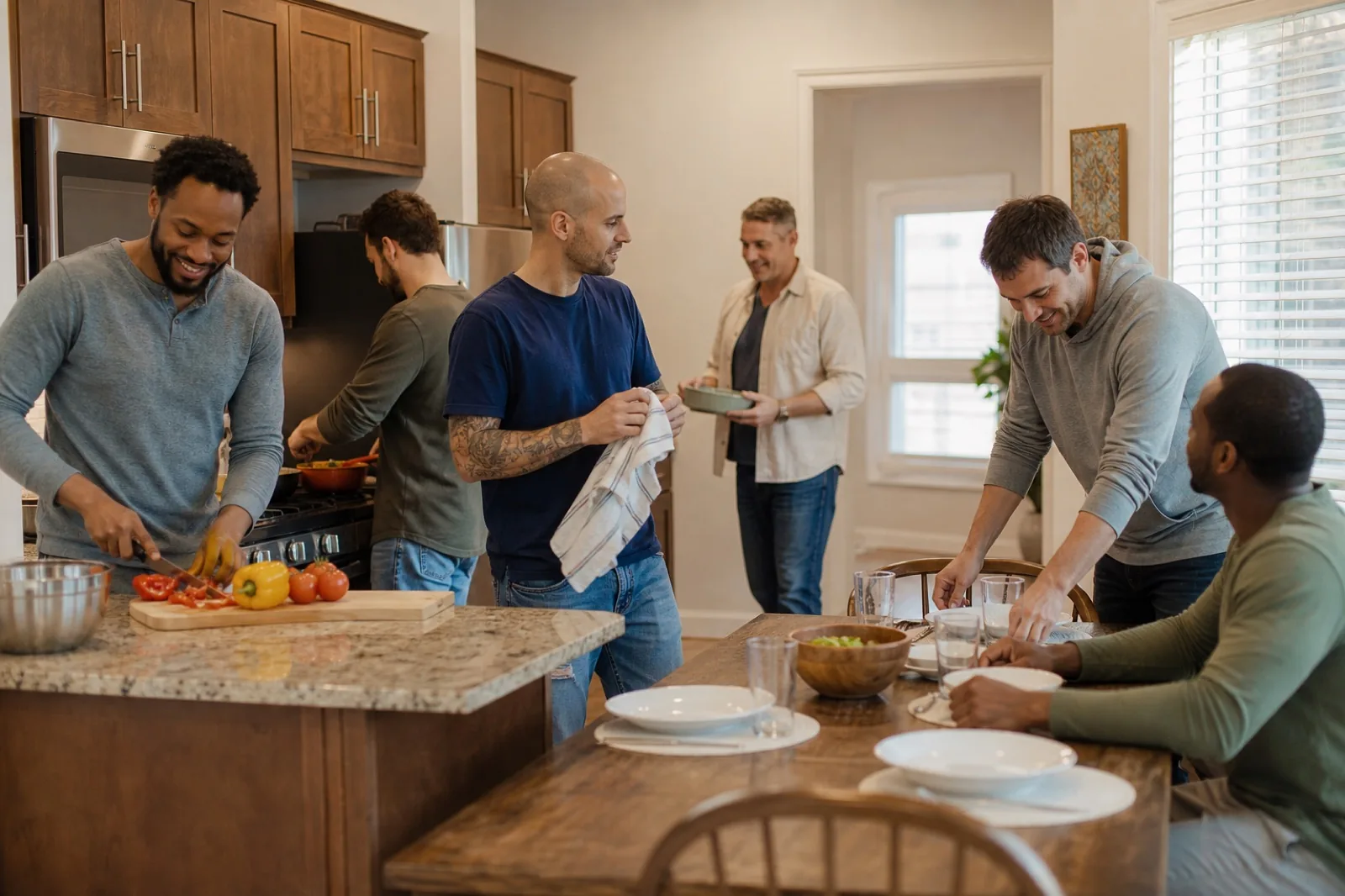
Premises + people
A recovery residence sees more visitors, more movement and more shared activity than a conventional rental. General liability responds to the ordinary incidents that come with living closely together.
01
Everyday premises risks
Most claims against communal housing are ordinary: a fall on a stairway, a slip in a shared bathroom, an injury on an uneven walkway, a burn in a shared kitchen. General liability is intended to respond to bodily injury and property damage arising from the premises and the operation. Volume matters here — a home with ten residents, their visitors, staff and deliveries simply generates more foot traffic than a family rental, and more opportunity for something ordinary to go wrong.
Premises + people
Coverage for the everyday movement, visitors and shared spaces that define communal recovery housing.
02
Resident and visitor activity
A recovery residence is busier than its street appearance suggests. Residents come and go for work, meetings and appointments. Family members visit. Meetings may be held in the house. Contractors and delivery drivers come to the door. The insurance program should be written around how the home is actually used rather than how a residential form assumes a house is used, because the difference is exactly where coverage disputes begin.
03
Defense costs and allegations without merit
An allegation does not have to succeed to be expensive. General liability policies commonly provide defense as well as covered settlements or judgments, and for a small operation the defense is frequently the more valuable half. Whether defense costs sit inside or outside the limit is worth confirming, because a policy that erodes its own limit paying lawyers protects less than it appears to.
04
Where general liability stops
It is important to know the edges. General liability generally does not respond to allegations about professional judgment or the guidance an operator provides — that is professional liability. It typically excludes injuries to employees, which is workers’ compensation, and use of vehicles, which is auto coverage. Abuse and molestation is commonly excluded or written separately and should be asked about by name.
Frequently asked
Common questions
Is general liability enough on its own?
Rarely. It addresses bodily injury and property damage arising from the premises and operation, but not professional judgment, employee injury, vehicle use, or in most cases abuse and molestation. Those are separate coverages, and the gaps between policies are where uninsured claims tend to land.
Does it cover a claim about how the home is run?
Generally not. An allegation that house rules were enforced inconsistently, that supervision was inadequate, or that a referral was mishandled is about professional judgment rather than premises condition, and is normally the province of professional liability.
Are residents’ visitors and guests covered?
Injuries to visitors on the premises are typically within the scope of general liability, subject to the policy terms. What matters more is that the policy was written knowing the home hosts visitors and meetings, since an application describing a quiet single-family rental sets up a dispute later.
No existing policy needed
Tell us how your sober living home actually operates.
Most operators who contact us are insuring a sober living home for the first time. Tell us how the home runs and we’ll come back with the coverage options and pricing available for it.